structural · tennessee
Cabin and Short-Term Rental Structural Letters in the Smokies
East Tennessee’s cabin market creates structural questions that do not come up in ordinary residential work. A three-bedroom house on a flat suburban lot and a three-bedroom cabin on a 30% slope in Sevier County are the same building program and materially different engineering problems.
Add a rental use that puts fifteen people on a deck twenty feet above grade on a Saturday night in October, and the difference stops being theoretical.
What makes mountain construction different
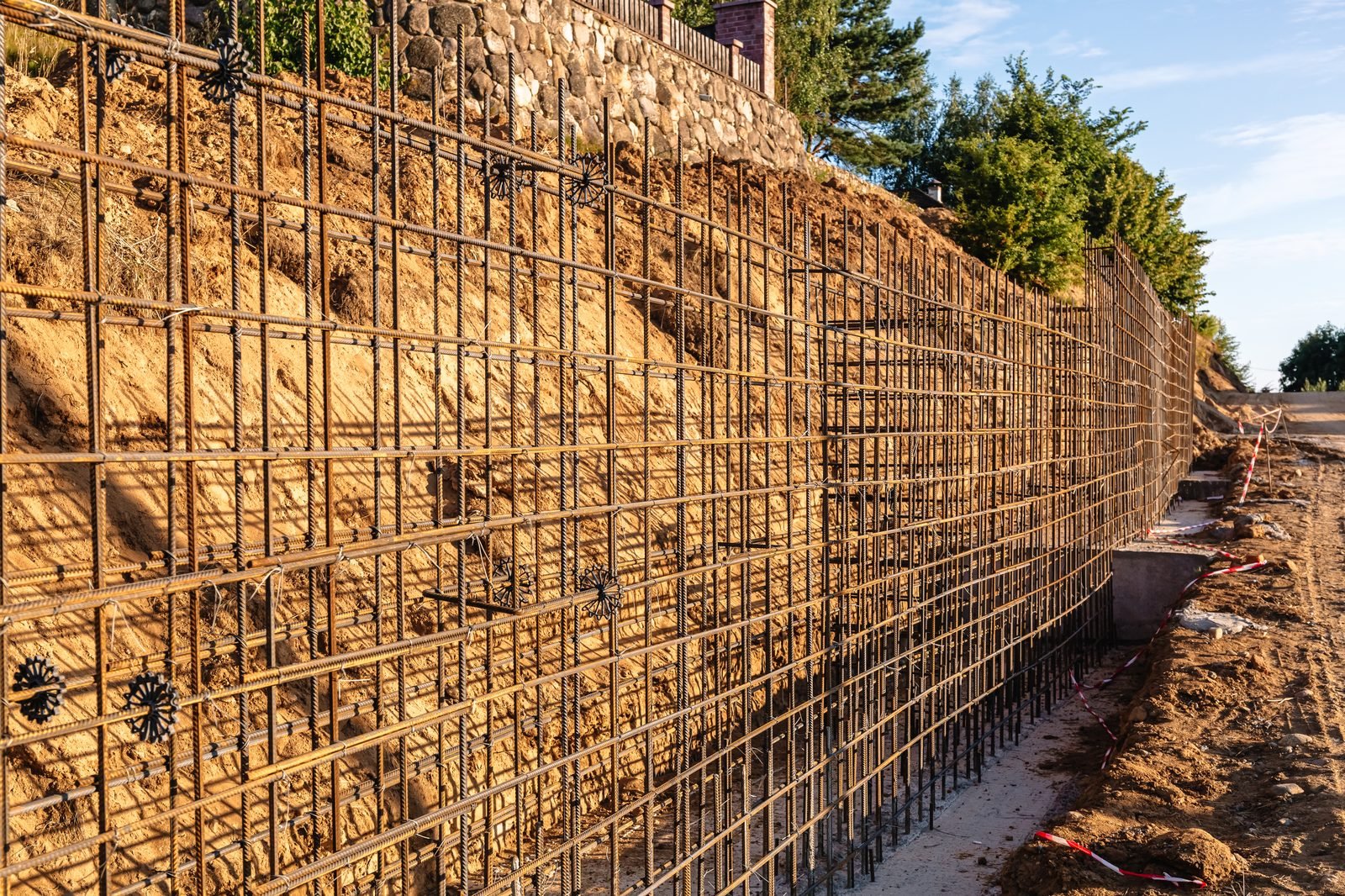
Slope. Foundations on sloping sites face requirements that flat-lot foundations never encounter: footings must bear on adequate material at sufficient depth, and must be set back from the descending slope face so the bearing pressure does not daylight through it. Where a structure sits above a slope, drainage above it becomes a structural concern rather than a landscaping one.
Elevated decks. The Smokies are full of decks that are one story above grade on the entry side and three stories above grade on the view side. The engineering is the same as any deck; the consequence of failure is not.
Freeze-thaw and moisture. Higher elevations cycle through freezing more often than the Tennessee Valley. Water that penetrates a ledger connection or sits at a post base has more opportunity to do damage, and connections that would last decades at lower elevation degrade faster.
Access for construction. Difficult sites produce shortcuts. Foundations poured in weather they should not have been, deliveries substituted with what could be carried up, and connections made with what was on the truck rather than what was specified.
Age and evolution. Many cabins have been added onto repeatedly over decades — a deck here, a hot tub there, a bedroom bumped out — often without permits, often by different builders with different standards, and often without anyone checking whether the original structure could carry the addition.
Decks: where most of the risk actually is
Nationally, deck failures are overwhelmingly connection failures, not member failures. The joists are rarely the problem. The attachment to the house is.
Ledger attachment. A deck ledger fastened with nails, or with lag screws where the governing code required through-bolts, or fastened through siding without proper flashing and blocking, is the classic failure. It can hold for years and then fail suddenly under a full occupancy load.
Lateral load connection. Recent code cycles have required a dedicated lateral load path from the deck back into the house structure — hardware specifically resisting the deck pulling away. Older decks predate this, and many decks built after the requirement do not have it because the builder was unaware.
Guard and rail post attachment. A guard has to resist a substantial concentrated load at the top rail. Posts bolted only through the rim joist, without proper blocking and hardware, frequently cannot. On an elevated mountain deck this is the failure mode with the worst consequences.
Post bases and footings. Posts bearing directly on soil or on inadequate footings, without proper standoff hardware, rot at the base. On slope, footings that were adequate when poured can be undermined by years of water movement.
Hot tubs. A filled hot tub with occupants is a very large concentrated load. Decks are routinely designed for uniform residential live load and then have a hot tub added years later with no structural review. This comes up often enough in the Smokies to be worth checking specifically.
Occupancy: residence versus rental
Where a jurisdiction treats short-term rental use as a change of occupancy, additional requirements can attach. Where it does not, the structure is evaluated as a dwelling regardless of how it is rented.
This varies, and it has been an area of active local regulation across Sevier County and its municipalities. The honest answer is that you have to ask the specific jurisdiction rather than rely on a general rule — including this article.
What is consistent regardless of classification: actual loading changes with rental use even when the code classification does not. A family of four uses a deck differently than twelve guests at a reunion. A structure that has performed fine for fifteen years as a second home may see loads it has never seen once it goes on a rental platform. That is a real engineering consideration whether or not it triggers a permit requirement.
Jurisdiction in Sevier County
Establish this first, because it determines everything downstream.
Sevierville, Pigeon Forge, and Gatlinburg each have their own permitting and inspection authority. Property outside those municipal limits falls to Sevier County.
Mailing addresses do not resolve it. A great deal of cabin inventory carries a Sevierville or Gatlinburg address while sitting well outside either city. The reliable method is pulling the permit history and seeing which department issued prior permits on the parcel.
Tennessee’s statewide baseline is the 2018 IRC, and East Tennessee jurisdictions generally track the state baseline rather than adopting ahead of it — but confirm rather than assume, and remember that for existing work the relevant edition is the one in force when the work was built.
What an evaluation involves
Establish jurisdiction and the governing code edition, including the date any existing work was performed.
Inspect the accessible structure. Underfloor and crawl space framing, foundation and pier condition, deck framing and connections from below, post bases, visible ledger and flashing conditions, and any evidence of movement — out-of-level floors, separated trim, cracked masonry, doors that no longer latch.
Evaluate the site. Drainage patterns, slope condition above and below the structure, erosion at footings, retaining structures, and any evidence of soil movement.
Assess connections specifically. This is where the engineering attention belongs on a mountain deck. Where connections are concealed, targeted openings at representative locations are usually more informative than any amount of inference.
Check loading assumptions against actual use. Particularly hot tubs, large gatherings, and any addition made after original construction.
Certify or specify corrections. If the structure is adequate, a sealed letter says so and states what was evaluated. If it is not, the deliverable is a correction scope — which for decks is frequently modest hardware work rather than reconstruction.
What owners should do
Before buying a rental cabin, get the permit history and a structural evaluation. Deck and foundation issues on slope are expensive, and they are not reliably visible to a general home inspector.
Before listing an existing property as a rental, check the deck connections specifically. Ledger attachment and guard post attachment are the two items worth verifying regardless of what any regulation requires.
If a hot tub was added after the deck was built, get the deck evaluated. This is the most common structural oversight in the entire market.
If additions were made without permits, address it before a transaction rather than during one.
We issue structural evaluations, deck certifications, permit closures, and missed-inspection letters across Knox, Blount, Sevier, Anderson, and Loudon counties — see our engineer letters in Knoxville page for coverage and turnaround. For decks specifically, our deck and addition engineer letter article covers the certification process in more detail.
FAQ
Frequently asked
- Do I need an engineer letter to convert a cabin to a short-term rental?
- It depends on the jurisdiction and on whether the conversion is treated as a change of occupancy. Some jurisdictions treat a single-family residence used as a short-term rental as a continuing residential use requiring no structural review; others apply additional requirements. Where a change of occupancy is triggered, or where a permitting authority questions deck capacity for higher occupant loads, a structural evaluation is commonly requested.
- Why do mountain decks need more attention than flatland decks?
- Elevation multiplies the consequences of the same defect. A deck three feet off the ground that fails is an injury; the same deck twenty feet up a slope is far worse. Mountain decks also carry higher live loads during peak rental occupancy, sit on foundations bearing on slope, and are exposed to more severe moisture and freeze-thaw cycling. Ledger attachment and lateral load connection are the failure points that matter most.
- What is different about foundations on a slope?
- Bearing capacity, setback from the descending slope face, drainage, and lateral earth pressure all become design considerations that a flat-lot foundation does not face. Footings must bear on adequate material at sufficient depth and must be set back from the slope face so the load does not daylight through it. Poor drainage above a structure on slope is a common contributor to movement.
- The cabin was built years ago without permits. Can it still be certified?
- Often yes, but the analysis is against the code in effect when it was built, which has to be established first. Where original construction is concealed, evaluation relies on accessible framing, crawl space and underfloor inspection, targeted openings, and documentary evidence. If genuine deficiencies exist, the output is a correction scope rather than a certification.
- Who has jurisdiction in Sevier County?
- It depends on whether the property is inside a municipality. Sevierville, Pigeon Forge, and Gatlinburg each have their own authority; properties outside those limits fall to Sevier County. A Sevierville or Gatlinburg mailing address does not establish which. Pull the permit record to confirm before assuming.